Friday, April 18, 2014

Silhouette Study Garment


     I printed out the pattern of the vest and cut the pieces out on muslin, then I found out that the pattern doesn't really working: it has a extra piece on the pattern that doesn't make sense, and the shape of the vest becomes weird after adding that piece. So I decided to delete that piece. While I was sewing the pattern together, I change the pattern a little bit to make the waist even thinner, and I add two long pieces at the bottom of the vest. However the pattern of the long pieces and the fabric doesn't work as I thought, I expected a more natural and soft flow and it didn't come out that way. I am still considering to make a vest for my final project, however I would more tend to design the pattern by myself.

Saturday, April 12, 2014

silhouette research

    I choose a pattern of a vest. Because while I am searching for the history of femininity in male's fashion, I found a lot of feminine factors in the mid-century male's clothing and I think vest is a important element in the mid-century fashion for men. In order to make the vest more feminine and relates more to my topic, I would make the waist even thiner, and then I would at a longer piece on the bottom of the vest because people would generally consider that female clothing fits the natural line of body more and is more curvy in design. So I narrow the waist down to exaggerate the line of body. 


Friday, April 4, 2014

Pattern Collection Swatch Book


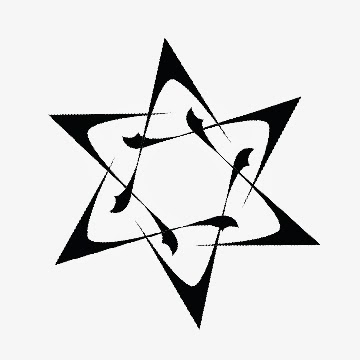
    My pattern swatch talks about the idea of femininity in male's fashion. My basic motif is transformed from a tick mark: the left part of the tick is sharp and hard, while the right part of the tick is more curvy and has more volume; the angle of the tick is a sharp acute angle while the interior angle is a soft curve. This motif basically contains my concept of femininity in male's fashion--it has straight lines and sharp angles while also contains curves, which represents that femininity can also take place in male's fashion. I choose  black, white, sax, navy, dark blue, pink, ivory and light brown for my color swatches. Most of the colors that I chose are cool colors, so I choose pink, which is a very warm and feminine color to balance my color swatch. My plane patterns basically convey the idea of combining straight lines and curves. Since this project requires two color variations of each pattern, I made most of the patterns with one color variation with more warm colors and the other color variation with more cool colors. 
    I found it quite difficult to combine the pink color in patterns, because it would be easy to be too feminine for male. So I am trying to make a balance between the pink color and the other colors. And also, while I was researching for historical information for this project, I realized that my assumption of the development of femininity in male's fashion was totally wrong. At the very beginning of the project, I thought that in the past people should be more conserve about sexual identity and would more likely to connect femininity with female rather than men. And I assumed that relating femininity with men was the thing that occurs in modern days, which people are more open-minded about sexual identity and sexual equalityWith my research for this swatch book, I found out that there are a lot of feminine factors in the mid-century european male's clothes and hair styles, and there are always some feminine factors in male’s fashion. This is really not what I've expected. Finally I get my inspiration for my garment designs from the mid-century european male's clothes which I think represents the essence of femininity in male's fashion. I feel I really learn a lot in the process of making this book.
    

Thursday, March 20, 2014

Research on textile examples

  In the research I found the male's cloth that has the feminine characteristic usually include the textiles that would normally occur on women clothing like flowers, colorful stripes and complex embroidery.  For the first one, the dress on David Bowie has the large blue flower pattern that looks very soft and beautiful and has a mild contrast with the creamy background color of the fabric. This kind of combination does not usually occur on men's clothing. The second one is a jacket with a thin waist and very complex embroidery on the cuffs and the placket. This kind of complex embroidery usually occurs on the mid century clothing and it looks very sumptuous. The last one has the thin golden stripes on both the top and the shorts. The color choice of the top and the shorts has a very nice contrast although they both has golden stripes.

David Bowie, The Man Who Sold the World album cover, 1970

Thomas Patrick John Anson, Earl of Lichfield, 1968

“Boy with a Greyhound” by Paolo Veronese, c.1570s

Pattern Construction

Point Group


Line Group


Plane Group